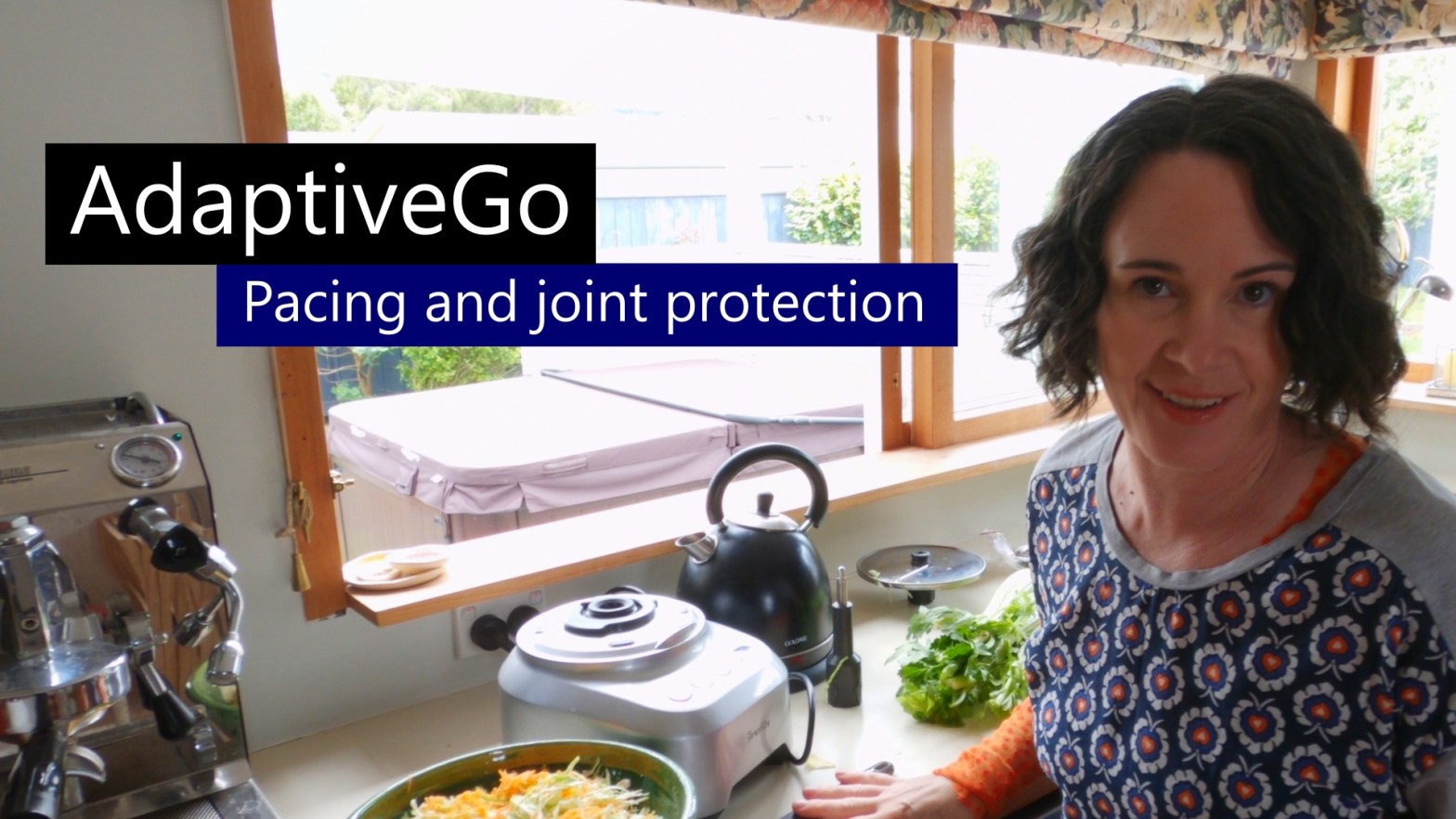
Pacing helps to stop the boom and bust. For me my goal was trying to get dinner on the table for the kids without being exhausted and grumpy by the time I sat down to eat with them. Pacing improves the chances of us having a conversation at the table. I used two techniques to get me through preparing the meal and coping with the “witching hour”.
Pacing
Pacing – Find your limits first. But generally, pacing works if you adapt by chop, change and mix it up (M.E. Awareness techniques is easy to follow, other pacing techniques in the links below)
Chopping or cutting out the unnecessary activities
- Work out what you need to do stop doing unnecessary things. For example don’t peel veges, buy grated cheese, and cut meat. Not peeling your veges has the double benefit of being better for the environment
- Think about whether o you need to do all of it? – can the kids help? Mine started helping with dinner at the ages of 9, 7 and 4. Even the little bits that my youngest did helped
Changing or adapting the way you do things
- Sit instead of stand. For example I use a saddle chair, but you could put rubber mats down, or make use of the trolley to help move things around the kitchen
- Use helpful equipment – good grips is a brand of kitchen utensils but they have nice wide grips. I use a bike inner tube for wrapping around lids to give me extra grip, use scissors to open chips, and a food processor to cut, grate, slice.
- Consider having one or two easy meals on your weekly meal plan – these are homemade takeaways and might include pizza bases, burgers, sausages and pasta, scrambled eggs and baked beans, frozen veges, cut fruit and veges
- Change your environment – for example I organised my kitchen so that dishes are close to the dishwasher, lift up heavy stuff, put spices into a drawer, etc
Mixing it up
- Stopping before you reach your energy limit
- Rest and recharge between tasks – if you can pick away at meal prep. I worked part time, so would start meal prep early and have a break in between tasks by watching TV with the kids
- Task Switching – is where you swap tasks, so stand for a little bit, then do some tasks seated at the table. Or change the activity so that your hands aren’t chopping endlessly
Joint protection
- I use sharp knives to save on the joints
- I use a kettle with handle on the top, so I can lift the kettle with two hands
- Teapot, with a heat resistant pad underneath so I can use two hands to pick it up
- I drag pots along the bench
- I use a non-slip mat or tea towel to put pots on and then tip them to drain heavy pots without lifting
Your ideas
You might have some other ideas or tips, please share them in the comments so that other people watching the video can pick up on your tips.
Links
M.E. Awareness NZ https://m.e.awareness.nz/a-guide-to-pacing-for-pwme
Department of Health, Western Australia – https://painhealth.csse.uwa.edu.au/pain-module/pacing-and-goal-setting/
 AdaptiveGo
Las Vegas, Nevada, USA. Excellent tips on your website and in the video! So glad I found both. Even though it’s thumb arthritis I have now, all these tips, like pacing, etc. are going to be big helpers for me! Thanks
LikeLike