
Making the invisible visible
When I’m not riding my sit ski up the maunga (mountain), at first glance I look just like everyone else. It’s not until you spend time with me that you notice that my hands don’t work right or that I can’t stand for very long or that I have to concentrate hard on each step when I’m walking.
Being in a sit ski is a very different experience because my disability is on display. On the maunga when I’m in my sit ski, people engage differently with me. Most people are kind and it can be a very inclusive experience. I know a lot of people stare at me, but I like to think they’re admiring my skill and panache! A few ignore me, a few over-help and a few act like I’m not all there in the head. I’m sometimes shouted at like I’m deaf!
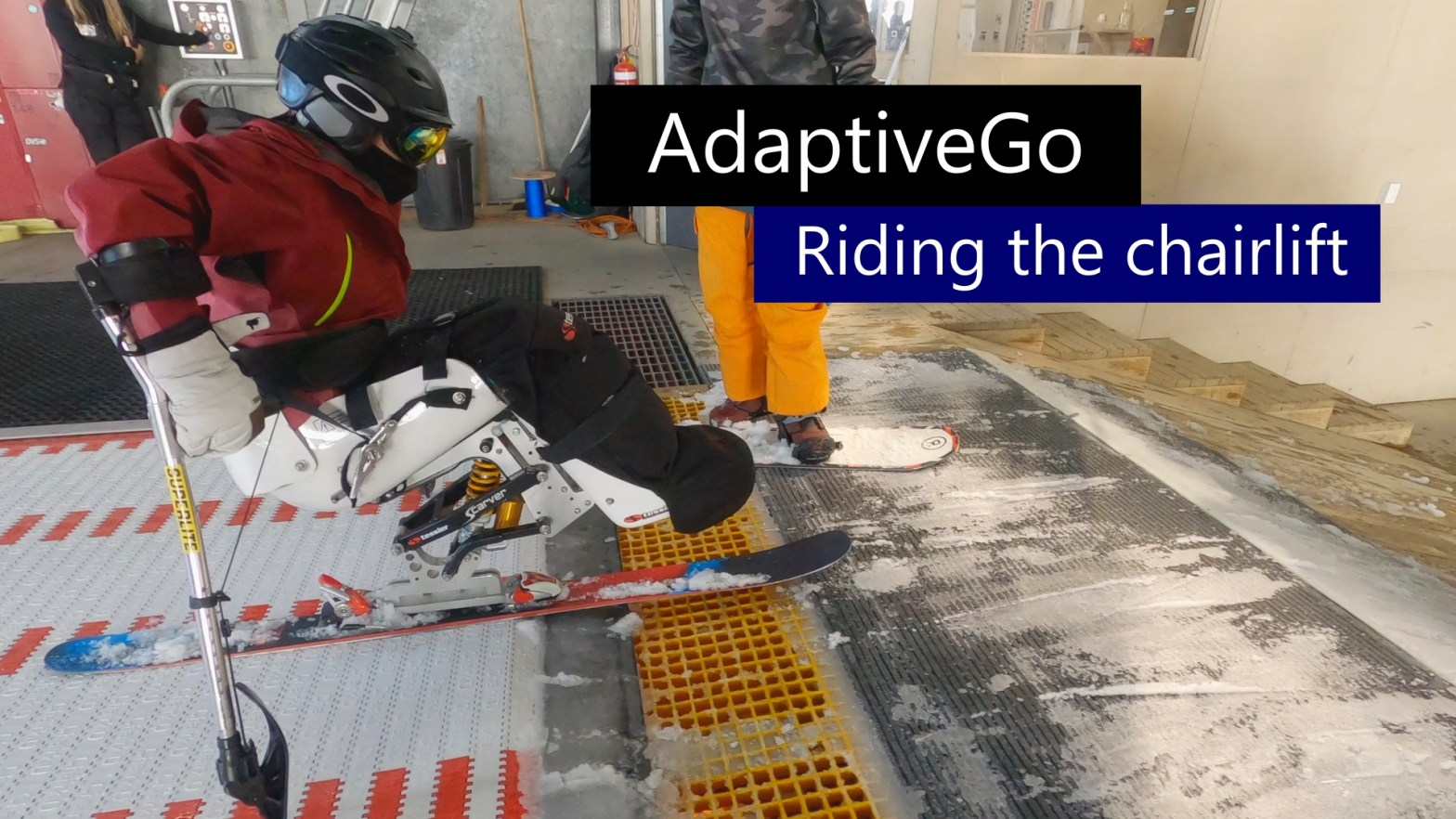
It takes a bit of skill to load and unload on the chairlift
It’s taken quite a while for hubs and me to work out the best way to load and unload on the chairlifts. We need to keep adapting and changing things because my disease changes what I can and can’t do. It’s also tricky to get it right because we ski as a family, so we’re juggling the kids as well as the sit ski. Sometimes the kids want to ride with me, sometimes with hubs, and often that means that hubs and I do not get to ride the chairs together and have an opportunity to really nut out the best way to load and unload.
I feel a lot of pressure to get the load right. There’s always someone waiting, and sometimes long lines of people waiting. I’ve also had a number of falls loading and unloading on chairlifts. The ground on a chairlift is usually icy, so loading falls can be very painful. One time I fell off the chairlift, missed the short but steep offload ramp, somersaulted, and landed on my neck with the tip of my ski stuck in the snow above my head. The poor liftie had to come and unravel me and help me up so that we could clear the chairlift.
I’m vulnerable when I’m riding the chairlift
I feel vulnerable loading and unloading. I’m all strapped in and I can’t move my sit ski to leap onto the chair, or even grab it to help me load. I’m just sitting there with my bottom hanging in the air waiting in the most undignified position for the chair to swing round. If I slip and fall, I can’t move or get myself out of the way. I’d like to say I’m like a fish out of water, but a fish out of water does a lot more flopping and springing around than I can manage. My vulnerability combined with my fear of a chairlift load going wrong makes me shouty. I really appreciate that the lifties take this with a grain of salt and load me very nicely anyway.
The chairlifts are not designed for disabled people
Chairlifts are designed for able-bodied people. Disabled access is made possible though rig design, sheer grunt work, and support assistance (usually from the lift crew and sometimes from a support person). The better that these factors work together, the smoother the lift load. Tessier (the company that makes my sit ski) have designed a rig that is stable and safe on the chair and that is easy to load and unload. Ski resorts also train their lift crews to safely load adaptive skiers.
At Mt Ruapehu, we tend to ski Turoa because the Sky Waka gondola at Whakapapa was not installed, or designed, with disabled access in mind. The work around for using the Sky Waka requires significant effort from the lifties, my support person (hubs) and me! It means getting out of my sit ski at the end of the run, hubs lifting the sit ski into the Sky Waka, and then using a whole gondola for the five of us, plus the sit ski. If there is a queue, then that would also create additional logistical challenges. The energy involved when I have chronic fatigue, is difficult to manage. For someone in a wheelchair, it would be mean a transfer to a wheelchair and a transfer back into the sit ski and then for the lifties to return the wheelchair to base. Or it would mean the sit skier could only use the upper mountain for the day.
Trust and accepting help
Trusting the lifties helps. At the start of the season, we’re all a little rusty, but I’m the rustiest of all! It’s much easier to have higher trust at the end of the season when we all know each other. The lifties have a pretty difficult job loading sit skiers because every rig works differently and every sit skier is different. So, while I still let them know what I need and how they can help, it goes much easier if I can let go of my fear and smile instead.
The more relaxed and calm I am, the better the ride.
Steph’s mantra
LEARNING FROM SPORTS helpS me cope with life
Learning how to ride the chairs is a challenge I’ve met
In the end, to help improve my loading and unloading, I contacted Tessier (the company that makes my sit ski) and asked them how they recommend the chair lift loads should be done. Hubs and I have also found that if he helps me load and unload, then we’re guaranteed a safer lift load. We’re starting to teach the kids how to help me with the loading and unloading, so that we can all ride the chairs together.
Thanks lifties!
Please get in touch


By submitting your information, you’re giving us permission to email you. You may unsubscribe at any time. Your email or name will not be published.
 AdaptiveGo