We all experience grief at some point in our lives. But we do not often discuss our grief and how people with serious injuries or a chronic health condition might be experiencing it. If we discussed it more, perhaps it might help improve our wellbeing outcomes.
Six years after I was diagnosed, I was finally able to give a name to the emotional ups and downs that I was experiencing because of my chronic health condition, spondylitis. An rheumatologist nurse explained that what we feel is grief, and that the grief we experience is often more intense because we can’t leave our bodies and get a break away from what is causing our grief. It seems obvious now that what I was experiencing was grief. Grief from not being to do what others could do, like run around in the backyard with my children kicking a ball, or doing the sporting activities that I loved including competitive road cycling.
Why do we experience grief when we have chronic illness or serious injury?
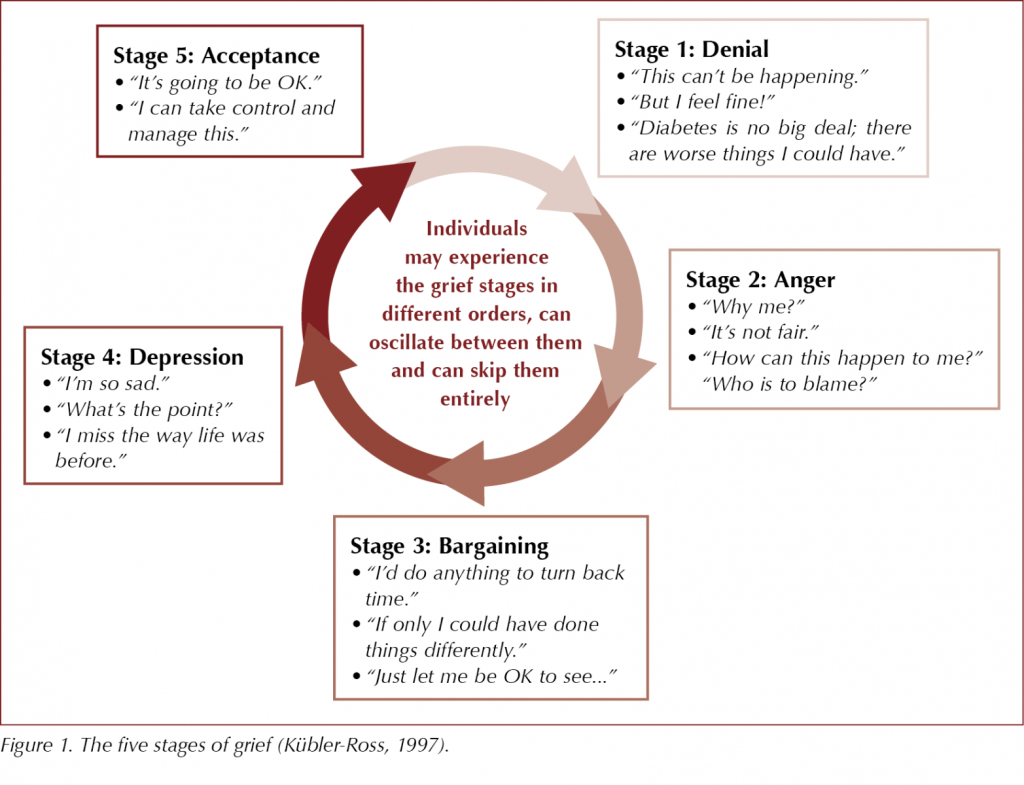
Chronic illness or injury and grief often walk hand in hand and we can move in and out of the grief cycle. Some even remain in the grief cycle as suggested in the figure below. While it is likely to be a different experience for every person, there can be a lot of losses depending on the nature and severity of the injury or illness. These losses might be compounded if there is progressive deterioration or relapses.
Grief can make us more unwell – physically and mentally
Grief can cause increased risk of an acute cardiovascular event and poorer health outcomes. Grief can increase our experience of pain and can also increase the amount of inflammation in our bodies. Most of the clinical research seems to focus on traumatic grief, I couldn’t find any specific research on how grief affects health outcomes for those of us with chronic illness or injuries. In my google search on grief and chronic illness I found a lot of patient posts about grief and chronic illness. Many were also posted by individual health professionals who either have chronic illness and/or support people with chronic illness.
Complicated grief is probably the best description that I found of what could happen if we do not address the grief we experience from illness or injury. Complicated grief differs from both depression and normal grief as a form of persistent and pervasive grief that increases the risk of physical and mental health problems (Shear, cited in WebMD). Treatment of complicated grief is different to depression and grief.
Imagine a person with a chronic illness as forever walking down a dividing line between the past and future. Looking backward, he can see everything illness has taken from him or has forced him to relinquish. Looking forward he can’t see anything quite clearly. There’s no going back to the past, and the future is uncertain.
Grieving chronic illness and injury – infinite losses by Kate Jackson Social Work Today, Vol 14 No.4 P.18
Understanding grief can help us cope and help how we talk about our injury or illness
Grief is fairly common shared experience. It is something our friends and family can understand and use to help inform how to support us and to also better interpret their own feelings of loss. It also provides some common ground for us to better communicate with each other about how we are all impacted by the injury or illness.
Although it’s quite old research Deitrich (1996, cited in Bateman 2018) found a link between the type 2 diabetes diagnosis conversation and clinical outcomes. Certainly bringing together our emotional journey and our clinical treatment is perhaps not given enough attention during our engagements with health professionals.
Grief is also something that most health professionals can understand and use to better support us in our health journey. Health professionals do not always have the time, the knowledge, or the confidence to help us overcome each specific loss that comes from new limitations. The more our health professionals can join up the the physical and emotional journey can only be beneficial. This does not mean providing counselling services (unless that is their role), but more to explain and point us in the direction of resources on how to adapt to our altered states in healthy way. This might help to mitigate the high rates of depression and anxiety that come with many chronic illnesses and injuries.
Moving forward: How to work with grief and adapt
Acceptance has often come up in the blogs or online support group comments as being the nirvana state, where we will start to “heal”. While, I find it difficult to agree that “healing” occurs, my personal experience is that allowing myself to grieve and work through the grief process each time helps me to cope. While it might not be “nirvana”, it is a much more peaceful place to be than feeling like you’re on a big slippery slide with unpredictable twists and turns leading to the inevitable downward spiral.

Acceptance in the grief process is an odd word, and one I find hard to come to terms with. Synonyms for acceptance is welcome, approve, and embrace (from Oxford languages). While I am grateful for many of things that I have learned from having spondylitis I don’t know if I will ever reach a point where I welcome and approve of it in my life! Pratt in How to move forward when you’re grieving your life before chronic illness prefers the terms “adaptation” or “integration” over acceptance. These blogs and the YouTube video below are all about how to adapt to your illness and injury and find ways to live free and full lives. So, “adaptation” works much better for me than acceptance – but each person is on their own journey, so just do what works for you!
I use New Zealand’s Mental Health Foundation wellbeing tips to help smooth out the grief process for me. Five of these tips are in this YouTube video I did and are also explained below.
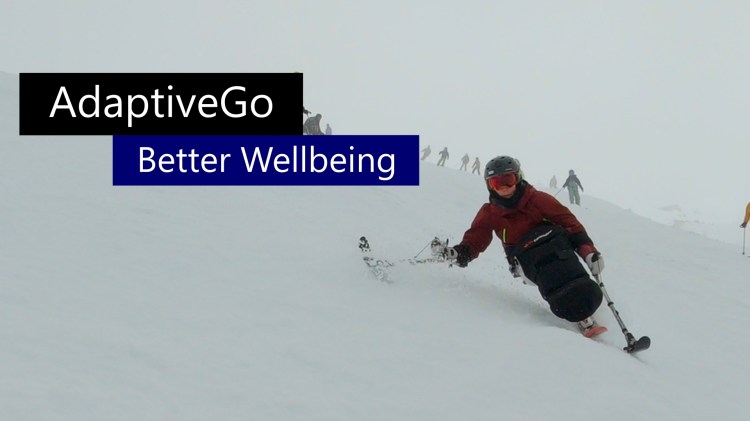
- Find ways to connect – for me this was connecting to other sit skiers and others with arthritis. It can also be about connecting to friends and family
- Find ways to take notice – there’s nothing like being on top of a maunga to help you take notice of and be grateful for the whenua and how it supports, sustains and nourishes us body and soul
- Find ways to move your tinana/body – for most people exercise (therapeutic or body movement) will help you feel better about yourself
- Find ways to give – think of Christmas and what its like to give presents, giving makes us feel good
- Find ways to keep learning – learning opens up our world and helps to fill our lives.


 AdaptiveGo